

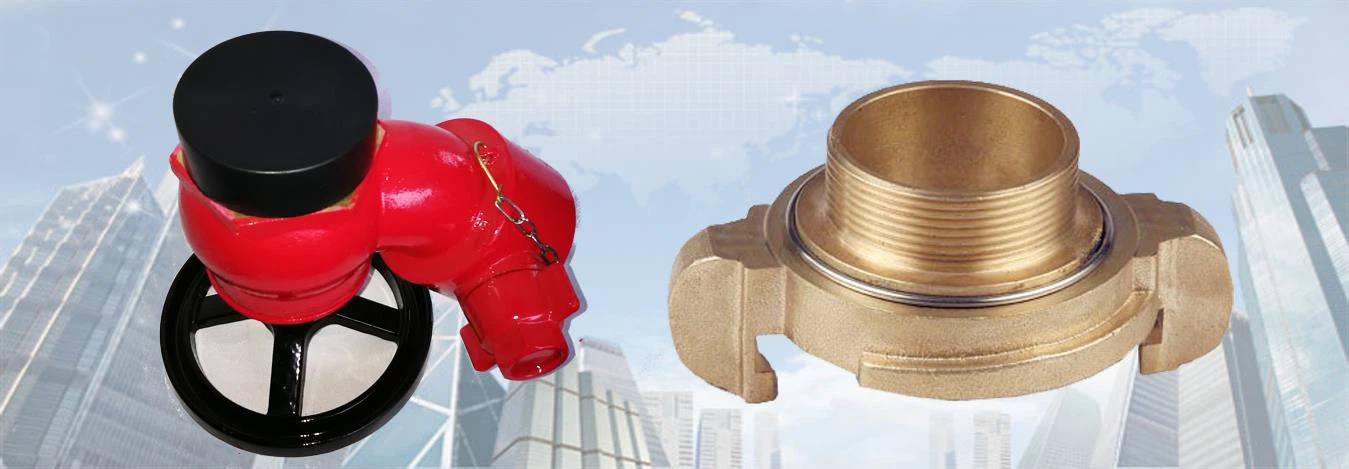
Brass Gate Valve
What Is Brass Gate Valve
A gate valve is named after the internal mechanism that enables water flow. This mechanism looks like a bit of gate that moves up and down on a stem connected to the handle. The handle is a screw handle that moves the gate up and down, opening and closing the valve as needed.
Advantages of Brass Gate Valve
Have Low Fluid Resistance
The Brass gate valve's body is a straight-through shape that does not alter the flow direction, allowing fluid to pass through the valve (when in the fully open position) with minimal resistance compared to other types of valves.
Provide Superior Sealing Performance
Brass Gate valves provide better sealing performance than shut-off valves. The gate valve's opening and closing mechanisms are faster and more convenient than those of the shut-off valve.
Have a Wide Application Range
Brass Gate valves are extremely versatile and can be used in applications with mediums like steam, oil, and other media. Plus, gate valves can be used in mediums containing granular solids and with high viscosity. It can also be used as a venting valve and a low vacuum system valve.
Gate Valves are Bidirectional
Brass Gate valve have dual flow directions. They're not limited to one-way flow, nor are they subject to the flow directions of the medium. Therefore, gate valves are suitable for use in pipelines where the flow direction may change. Plus, they are easier to install than other more sophisticated types of valves.
-
![Dry Riser Gate Valve]() Dry Riser Gate Valve1.Product introduction of Dry Riser Gate Valve Dry riser gate valves are fully compliant with BS 5041 Part 2 and should be installed within a locked shut dry riser outlet cabinet. 2.Product...read more
Dry Riser Gate Valve1.Product introduction of Dry Riser Gate Valve Dry riser gate valves are fully compliant with BS 5041 Part 2 and should be installed within a locked shut dry riser outlet cabinet. 2.Product...read more -
![Brass Dry Riser Gate Valve]() Brass Dry Riser Gate Valve1.Product introduction of Brass Dry Riser Gate Valve Dry riser landing valves are outlets from the riser main. The valves are situated on each floor of a high rise building and are usually housed...read more
Brass Dry Riser Gate Valve1.Product introduction of Brass Dry Riser Gate Valve Dry riser landing valves are outlets from the riser main. The valves are situated on each floor of a high rise building and are usually housed...read more -
![Brass Female Gate Valve]() Brass Female Gate Valve1.Product introduction of Brass Female Gate valve Designed by British standard,gate vales should be installed at the inlet of all hose reels and it should have a feature to ensure that the nozzle...read more
Brass Female Gate Valve1.Product introduction of Brass Female Gate valve Designed by British standard,gate vales should be installed at the inlet of all hose reels and it should have a feature to ensure that the nozzle...read more -
![Lock Shield Gate Valves]() Lock Shield Gate Valves1.Product introduction of Lock Shield Valve Lock Shield Valve is usually installed where unauthorized operation has to be avoided. A typical application of this valve is installing these at inlet...read more
Lock Shield Gate Valves1.Product introduction of Lock Shield Valve Lock Shield Valve is usually installed where unauthorized operation has to be avoided. A typical application of this valve is installing these at inlet...read more


Why Choose Us
Experienced Team
Our team of engineers and technicians has years of experience in the industry, and we leverage that expertise to provide our clients with the best possible solutions.
Exceptional Customer Service
We pride ourselves on providing exceptional customer service and technical support to our clients, ensuring that they have a smooth and hassle-free experience.
Quality Products
We use only the highest-grade materials and advanced manufacturing techniques to produce products that are reliable, durable, and perform to the highest standards.
Competitive Price
We have professional sourcing team and cost accounting team, stive to reduce cost and profit and provide you a good price.
Sustainable Development
Establish a good reputation and brand value in the industry, and promote the sustainable, stable, rapid and healthy development of the enterprise.
One stop solution
From the begining inquiry and throughout the entire process until you receive the goods. we are dedicated to supporting you every step of the way.
How To Choose Between Brass Gate Valve And a Stop Valve
There are a few factors to consider when deciding between a Brass gate valve and a stop valve for needs. Here are five factors to keep in mind:
Functionality: Gate valves are typically used for applications where a large volume of fluid needs to be quickly shut off. They are also often used in applications where the fluid is highly viscous or contains solids, as the gate can seal against these without issue. On the other hand, stop valves are better suited for applications where precision is critical. This is because stop valves can be slowly opened or closed, allowing more control over the flow rate.
So, when deciding between a gate valve and a stop valve, one should consider the volume of fluid that needs to be controlled, the precision required, and the properties of the liquid.
The answer depends on the specific needs. What's the need to do? A stop valve may be a better option if needed, a valve that can be opened and closed quickly. A gate valve may be a better option if needed, a valve that can be adjusted to regulate flow.
Pressure: Pressure is essential for two main reasons. First, it affects the amount of force required to operate the valve. A higher pressure requires more force, while a lower pressure requires less force. Second, pressure affects the seal on the valve. A higher pressure tends to cause a tighter seal, while a lower pressure can cause a leaky seal.
When choosing between a gate valve and a stop valve, then consider the system's maximum operating pressure. The maximum operating pressure is the highest pressure that the system can safely handle. If the maximum working pressure is exceeded, there is a risk of damage to the system or injuries to people using it. Gate valves are high-pressure valves, while stop valves can be used for both high and low-pressure applications.
Cost: There are many factors to consider when choosing between a Brass gate valve and a stop valve, but the cost is often one of the most important. Brass Gate valves are typically more expensive than stop valves, but they offer several advantages that may make them worth the extra cost. For example, gate valves are less likely to leak and provide a tight seal that can help prevent water damage. If cost is a significant consideration, compare the prices of both types of valves before making a decision.
Maintenance: When choosing between a Brass gate valve and a stop valve for the industrial process, it is essential to consider the maintenance requirements of each type of valve. Gate valves require more frequent maintenance than stop valves, as the moving parts of the gate valve are more likely to wear down over time. On the other hand, stop valves have fewer moving parts and thus require less maintenance.
Installation: When choosing between a Brass gate valve and a stop valve, it is essential to consider the ease of installation. At the same time, stop valves are typically much easier to install, especially in tight spaces. On the other hand, gate valves can be more challenging to install, but they are often the better choice for specific applications.
Types of Brass Gate Valve

Split Gate Valves
A split gate valve, or split wedge gate valve, is a type of wedge valve in which the wedge disk itself is made from two solid pieces, held in place by a spacer or spring. This gives it the ability to self-adjust to the seats, providing added flexibility and making it easier to achieve a tighter seal with less risk of sticking or binding. They are particularly suitable for use with non-condensing gases and corrosive liquids.

Parallel Gate Valves
A parallel gate valve (sometimes called a parallel disk gate valve, or parallel slide gate valve) operates in much the same way as a wedge gate valve, but the gate features two disks placed at a 90-degree angle to the fluid flow direction. They are generally seen as safer in high temperature applications, where the parallel design is less likely to result in thermal binding.

Knife Gate Valves
A knife gate valve is a well-known type that is designed primarily for use with very thick or viscous fluids, such as slurry or powder-carrying liquid. The disks in the knife gate valve model are tapered (effectively sharpened, hence knife valves) at one end to enable them to cut and move through thicker media more easily when closing.

Flanged Gate Valves
A flanged gate valve is one where the body of the valve is flanged and bolted to the bonnet (the part on top of the valve through which the handwheel assembly connects, and which gives access to the moving parts of the valve). This tends to make them better suited to higher pressure applications than screwed connections, but less ideal than specialist pressure sealing models.
Difference Between a Brass Gate Valve and a Stop Valve
Structure
Brass Gate valves have a gate that opens and closes to control the flow of liquids or gasses. The gate is usually made of metal or another durable material. Stop valves have a plug inserted into the valve's opening to shut off the flow of liquids or gasses. The plug is usually made of rubber or another soft material. The main difference between gate valves and stop valves is their structure. Gate valves have a gate that opens and closes, while stop valves have a plug inserted into the opening.
The Brass gate valve is more complicated than the stop valve and has a greater height dimension. The Brass gate valve appears shorter and taller than the stop valve. Particularly the rising stem gate needs more height.
Sealing Surface
The sealing surface on the Brass gate valve is self-sealing. The valve core is tightly connected to the sealing surface at the valve seat, so it does not leak. To achieve sealing, the sealing surface must be sealed by force.
Rheostat
The entire flow path is apparent when the Brass gate valve is fully open. This reduces the operating pressure loss for the medium. It has a lower flow resistance than the stop valve.
Direction Of Flow
The flow direction of the Brass gate valve is the same in both directions. The installation of an outlet and inlet direction is not required. The medium can flow in both directions. The direction of the arrow on the valve body should direct the stop valve. The direction of the stop-valves inlet and outlet is clearly defined. The flow direction of the stop-valves should follow the three chemical supplies of China's industrial valves.
The cut-off valve has a low inlet and a high outlet. The pipeline is not located on the same horizontal phase as the pipe. The flow path of the Brass gate valve is horizontal. The stroke of a gate valve is longer than that of a stop valve.
Working Principle
The stop valve opens and closes with a rising stem. This means that the handwheel rotates and rises and falls with the stem. The valve stem is made to rise and fall by rotating the gate valve, but the position of its handwheel remains the same. Different flow conditions exist, and the flow is different. The inlet and outlet directions for the stop valve are specified.
The inlet and outlet requirements for the Brass gate valve are not required. The gate valve can be fully or partially closed. The gate valve's opening and closing strokes are large, and the closing and opening times are long. The stroke of the stop-valve valve plate is more diminutive. Additionally, the stop-valve plate can be stopped at a specific place during flow regulation movement. The gate valve is only used for cut-off.
Performance Differences
Brass Gate valves are designed to allow for a smooth, uninterrupted flow of fluid or gas. They do this by opening and closing a circular gate in the center of the valve. When the gate is open, fluid can flow freely through the valve. When the gate is closed, the flow of fluid is stopped.
Definition and Structure of Brass Gate Valves
Brass gate valves are one of the most commonly used plumbing valves for household application, just little smaller than brass ball valves. Brass gate valve is metal-metal sealed valve and are currently widely used in water supply systems.
Today we're going to explain what is a brass gate valve, what's the structure of brass gate valves:

Definition and of Brass Gate Valves
Brass gate valves, also called brass disc valves, are valves in which the closing valve disc moves in the vertical direction along the centerline of the passage, used to turn the media on or off.
The brass gate valve is a control unit that moves the gate plate along the axis of the channel in the vertical direction and shuts off the medium flow control unit through the handwheel rotation drive. The utility model has the advantages of small fluid resistance, small opening and closing torque, and unlimited medium flow direction.
The brass gate valve has internal and external threads, flanges and welded joints. The shell and the gate plate adopt the constant temperature hot forging and tempering process, and the sealing surface is cut by Taiwan high-precision sealing surface special machine, and the "General Valve Pressure Test" standard. 100% pressure test before delivery.
Structure of Brass Gate Valve
Brass gate valve body: Main structure of the valve, used to hold pressure and end connections.
Brass gate valve wedge disc: Move upward and downward to open and close the flow, operated by hand-wheel.
Brass gate valve stem: Used to connect handwheel and the disc.
Brass gate valve bonnet: Used to seal the bonnet.
Brass gate valve gasket: Designed to seal the valve body and bonnet.
Brass gate valve packing ring: Used to fix the stem and keep it firm.
Brass gate valve packing gland: Used to seal the stem.
Brass gate valve seat: Used to seal the stem.
Brass gate valve packing nut: Fix the stem.
Brass gate valve handwheel: Used to open and close the valve.

Brass Gate Valve Functions
The ultimate goal of a brass gate valve is to completely stop the flow of water in the pipe…and restart it if necessary. Let's see how.
From the name, you can assume that this valve works on the gate principle. When the gate or disc is opened, the water flows. Conversely, the flow of water stops when the gate is closed. The opening and closing of the gate depends on the rotation of the hand wheel.
When the valve is closed, a few turns of the handwheel will move the gate up with the help of the valve stem. This will open the path for the water to flow. Turning back will lower the gate and seal the valve. As a result, the water flow will stop.
Unlike with certain other flow valve types, it is not always easy to tell whether a gate valve is open or not. Ball valves and butterfly valves, for example, will usually be closed when the handle is perpendicular to the pipeline or flow direction.
Since gate valve wheels sit above or to the side of the pipe and rotate through 360 degrees to open and close, you cannot always tell which position they are in at a glance. In most cases, turning a gate valve anticlockwise will open it, while turning it clockwise will close it. These directions will normally be marked on the handwheel or elsewhere on the outer body of the valve.
Unless you know for a fact that a gate valve is jammed or bound, you should always stop turning them when you start to feel significant resistance. Continuing to turn a gate valve against resistance can damage it, or the plumbing or ducting it is installed on. It may therefore be necessary to try turning a gate valve in either direction to ascertain which position it is currently in.
How Does a Brass Gate Valve Work
A gate valve can either be automatically or manually actuated. For manually actuated gate valves, a handwheel is turned to open and close the valve. For a non-rising stem gate valve, the handwheel is connected to a screw that threads into the disc. As the handwheel is turned, the disc is moved to the open (turning the handwheel counterclockwise) or closed (turning the handwheel clockwise) position. For a rising stem gate valve, the stem is directly fastened to the disc. When the handwheel is turned to open the valve, the stem will rise out above the handwheel and will recede back down to the handwheel when closing the valve.
If the valve is positioned in an area where it cannot be easily reached, a chain sprocket instead of a handwheel is used. Then a chain is attached to the sprocket so that operators can open and close the valve by pulling on the chain. Alternatively, the stem can be extended.
There are many different ways to automatically operate a gate valve. A geared electric motor can be used to turn a screw, advancing the gate. Alternatively, a pneumatic cylinder can be used to position the disc. Linear electric actuators are also used when using compressed air is not practical or possible.

Slide valves are simply controlled by a handwheel or actuator. The handwheel is attached to the valve stem. It operates similarly to other valves. When opening the valve, turning the handwheel threads the gate stems into the gate to close.
A Gate valve requires more than 360°rotation to fully open and close the valve. When the gate is raised, it opens the inlet and outlet, allowing the material to flow freely. And if that port is lower, it closes and blocks the media. Shut-off valves are generally installed in areas of the pipeline where they open or close for long periods, as it usually takes some time to switch between these two positions. Gate valves should only be used for on/off control.
Troubleshooting Tips For Brass Gate Valve Maintenance
Turn the valve at least once a month if it is not used regularly.
Check the flow pressure before any maintenance.
Replace the valve port by removing the upper body and stem.
Remove from the piping in reverse order of installation .
Certifications


Our Factory
Hongye factory has 100 staff, including 20 professional management and technical staff,our workshops are all ISO 9001:2008 certified,covering foundry,forging,machining by CNC,deep drawing and punching in iron,mild steel,gunmetal/LG2 etc.The factory has the capability of self-development,design,production,sales and severice of fire fighting system,set up the whole process for product produce,quality control and son on.

FAQ
We're one of the most professional brass gate valve manufacturers and suppliers in China, mainly engaged in wholesale service. Welcome to buy quality brass gate valve here from our factory.
Fire Hydrant Valve 63mm, Brass Female Gate Valve, Fire Hydrant Ball Valve