

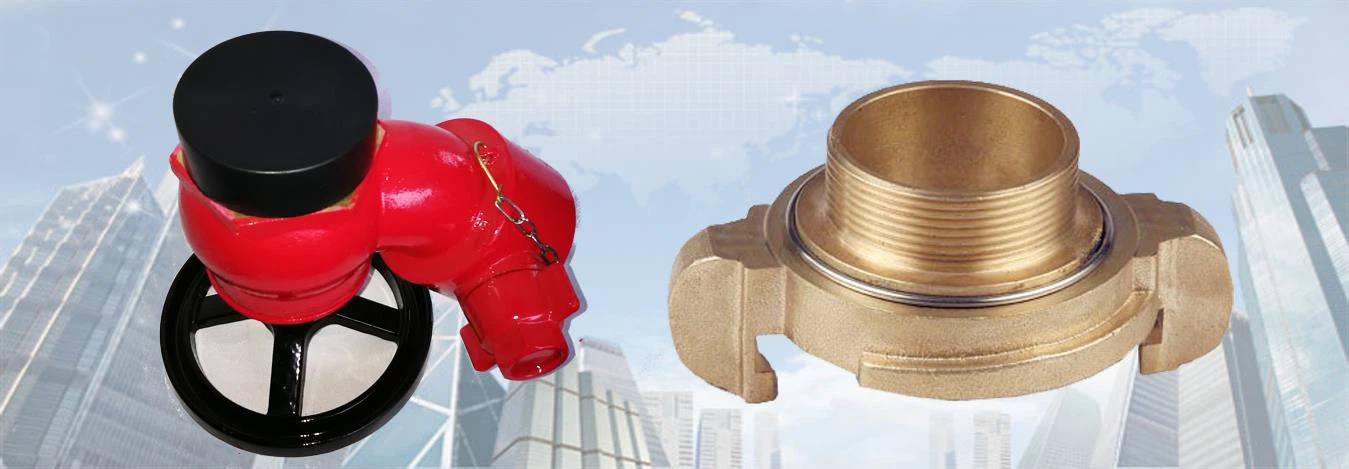
Landing Valves
This landing valve is an oblique flange type valve. It is made of copper with red painted body and black painted top. It is mainly used for fire hydrants.
What Is Landing Valves
The landing valve is considered a core part of the hose system that works as a manual stop valve allowing you to completely control your firefighting system. To activate the water flux of the firefighting system, you simply turn the landing valve handle counterclockwise. Water pressure matters for high buildings.
Advantages of Landing Valves
Increased Water Flow: Landing valves are designed to provide a high flow rate of water, allowing for effective firefighting operations. This makes them suitable for use in large buildings or industrial settings where a significant amount of water may be required to control a fire.
Easy Access And Operation: Landing valves are typically located in easily accessible areas, such as stairwells or fire hydrant systems. This ensures that firefighters can quickly locate and operate the valves during an emergency, saving valuable time in critical situations.
Durability: Landing valves are constructed from robust materials, such as brass or stainless steel, which make them resistant to corrosion and damage. This ensures their longevity and reliability, allowing for long-term use and minimal maintenance requirements.
Safety Features: Many landing valves are equipped with safety features, such as pressure relief valves or non-return valves. These features help prevent damage to the valve or the firefighting equipment and ensure the safety of the users during operation.
Compliance With Standards: Landing valves are designed and manufactured in accordance with industry standards and regulations. This ensures that they meet the required performance and safety criteria, providing assurance to users that they are using reliable and high-quality equipment.
Cost-Effective: Landing valves are relatively inexpensive compared to other firefighting equipment. Their affordability makes them a practical choice for building owners and facility managers who need to comply with fire safety regulations without incurring excessive costs.
-
![Oblique Landing Valves]() Oblique Landing ValvesOblique landing valves are made of copper material with flanged inlet. It is used for automatic air discharge in water supply pipes in firefighting.read more
Oblique Landing ValvesOblique landing valves are made of copper material with flanged inlet. It is used for automatic air discharge in water supply pipes in firefighting.read more -
![Landing Valve For Wet Risers]() Landing Valve For Wet RisersOblique landing valves are made of copper material with flanged inlet. It is used for automatic air discharge in water supply pipes in firefighting.read more
Landing Valve For Wet RisersOblique landing valves are made of copper material with flanged inlet. It is used for automatic air discharge in water supply pipes in firefighting.read more -
![Landing Valve Flange Type]() Landing Valve Flange TypeThis landing valve is an oblique flange type valve. It is made of copper with red painted body and black painted top. It is mainly used for fire hydrants.read more
Landing Valve Flange TypeThis landing valve is an oblique flange type valve. It is made of copper with red painted body and black painted top. It is mainly used for fire hydrants.read more -
![Right Angle Type Landing Valves]() Right Angle Type Landing Valves1.Product introduction of Landing Valve Flange Type Hongye produces various types of landing valves such as screw oblique landing valve, screw right angle landing valve, flanged right angle...read more
Right Angle Type Landing Valves1.Product introduction of Landing Valve Flange Type Hongye produces various types of landing valves such as screw oblique landing valve, screw right angle landing valve, flanged right angle...read more -
![Straight Through Type Landing Valves]() Straight Through Type Landing Valves1.Product introduction of Straight Through Type Landing Valves Hongye supply various types of landing valves such as screw oblique landing valve, screw right angle landing valve, flanged right...read more
Straight Through Type Landing Valves1.Product introduction of Straight Through Type Landing Valves Hongye supply various types of landing valves such as screw oblique landing valve, screw right angle landing valve, flanged right...read more -
![Horizontal Globe Pattern Landing Valves]() Horizontal Globe Pattern Landing Valves1. Product introduction of Horizontal Globe Pattern Landing Valves Hongye supply kinds of globe pattern landing valves, our horizontal globe pattern landing valves are made only from high quality...read more
Horizontal Globe Pattern Landing Valves1. Product introduction of Horizontal Globe Pattern Landing Valves Hongye supply kinds of globe pattern landing valves, our horizontal globe pattern landing valves are made only from high quality...read more


Why Choose Us
Experienced Team
Our team of engineers and technicians has years of experience in the industry, and we leverage that expertise to provide our clients with the best possible solutions.
Exceptional Customer Service
We pride ourselves on providing exceptional customer service and technical support to our clients, ensuring that they have a smooth and hassle-free experience.
Quality Products
We use only the highest-grade materials and advanced manufacturing techniques to produce products that are reliable, durable, and perform to the highest standards.
Competitive Price
We have professional sourcing team and cost accounting team, stive to reduce cost and profit and provide you a good price.
Sustainable Development
Establish a good reputation and brand value in the industry, and promote the sustainable, stable, rapid and healthy development of the enterprise.
One stop solution
From the begining inquiry and throughout the entire process until you receive the goods. we are dedicated to supporting you every step of the way.
How Do Pressure Regulating Landing Valves Work
Pressure regulating landing valves are important components in fire protection systems. They are installed in the hydrant system to regulate and control the pressure of water supply to fire hoses and sprinkler systems. These valves use advanced technology to ensure that the water pressure remains stable and does not fluctuate during a fire emergency.
The operation of a pressure regulating landing valve is quite simple. When water flows through the valve, it passes through a series of chambers, springs, diaphragms, and other components that regulate the pressure of the water. As the water pressure fluctuates, the valve automatically adjusts to maintain a consistent pressure output, ensuring that the fire suppressant system receives a consistent supply of water.
The valve consists of an inlet connection through which the water supply enters the valve, a control chamber where the pressure is regulated, and an outlet connection where the water is distributed to the fire hoses or sprinkler heads. The valve is equipped with pressure gauges that allow firefighters to monitor the pressure levels throughout the system.
One of the key benefits of pressure regulating landing valves is that they prevent water hammering. Water hammering is a phenomenon that occurs when a water supply system experiences rapid fluctuations in pressure due to the sudden closing or opening of valves. This can cause serious damage to pipes, valves, fittings, and other components. With pressure regulating valves, the water pressure is controlled, preventing water hammering and extending the life of the system.
Another advantage of pressure regulating landing valves is that they can be customized to meet specific requirements. For example, they can be adjusted to deliver water at a specific pressure for specific applications such as industrial fire protection systems, sprinkler systems, and fire hydrants for residential or commercial areas.
Pressure regulating landing valves play an essential role in fire protection systems. They ensure that the water supply remains stable, prevent water hammering, and can be customized to meet specific requirements. By regulating the water pressure, these valves help firefighters to effectively suppress fires and protect lives and property.
Different Types of Landing Valves
Before moving on to the different types of landing valves, you should know what landing valves are because. one of the best suppliers of industrial valve in Delhi. For fire-fighting purposes, buildings are provided with wet risers and landing valves are installed on these. They are basically backed by a pressurized supply so that they can remain charged with water at all times. the valve suppliers in have different types of valves. Some of them are as follows Oblique Type Landing Valve.
This is one of the types of landing valves that you can avail from fire fighting equipment suppliers and they have a very compact design along with being completely free of any form of corrosion. You will get them in different sizes as well.
Double Outlet Type Landing Valves
These are another type of landing valves that you are going to get from the valve distributors in India and they are made using quality raw materials. They have a sturdy structure and several performance tests are performed before they are launched into the market.
The above two types of landing valves are available in two types of materials. The first one is the stainless steel variation and the second one is that of gunmetal.
To ensure better protection from fires, every floor of a building should be well-equipped with landing valves. Because in case there is a fire outbreak, the firemen will need these landing valves so that they can connect their hoses to it and then use the water supply to extinguish the fire. So, by now you should have understood how important the landing valves are and if you are looking for the best industrial valve dealers in Delhi, then SKG Pneumatics Inc. is the answer for you. You will get an amazing and top-notch range of fire-fighting accessories from them and that too at reasonable prices.
You never know when an accident is going to strike but having your building prepared to deal with any kind of fire incident is of utmost importance.
The Importance Of Hose Reels And Landing Valves In Fire Fighting


Firefighting is a dangerous and demanding profession that requires a considerable amount of experience, training, and equipment. One of the most critical features of any firefighting operation is the use of hose reels and landing valves. These seemingly small components play a critical role in ensuring that firefighters can effectively control and extinguish fires while minimizing risk to themselves and the public. Hose reels and landing valves are designed to provide firefighters with a reliable and safe source of water during a fire emergency, allowing them to deliver water to the fire quickly and efficiently.
We will discuss the vital role that hose reels and landing valves play in firefighting, and the importance of proper maintenance and inspections to ensure that they function correctly during an emergency. We will also cover the different types of hose reels and landing valves available on the market and the various factors to consider when choosing the right equipment for your organization. With a deep understanding of the importance of these components, firefighters can help ensure they have the right tools to
Hose Reels Allow For Efficient Deployment Of Hoses
Hose Reels and Landing Valve play a crucial role in any firefighting operation. Hose reels, in particular, allow for efficient deployment of hoses during an emergency. Having a functioning and well-maintained hose reel system can greatly reduce the response time and increase the effectiveness of a firefighting operation. With a hose reel in place, firefighters can quickly access to hoses, which is essential when time is critical. Not only do they streamline the process of getting the hoses ready, but hose reels also ensure that the hoses are not tangled, knotted or damaged, potentially affecting their performance. Therefore, investing in a high-quality hose reel system and regularly checking and maintaining it can help ensure an efficient and effective firefighting operation.
Landing Valves Provide Easy Access For Firefighters To Connect Hoses
Landing Valves are an essential component of any Hose Reels and Landing Valve system in any firefighting operation. Their primary purpose is to allow easy access for firefighters to connect hoses to a building's water supply. They are usually installed on the ground floor of a building, and in high-rise buildings, they may be installed at various levels. The Landing Valve is designed to withstand high pressure and contains a female coupling to which a male adapter can be attached for the hose connection. Proper maintenance of Hose Reels and Landing Valves can ensure that they are always in good working condition and ready for action in case of an emergency. This makes them an indispensable piece of equipment for any firefighting operation, as they provide first responders with quick and easy access to the water supply they need to combat fires.
Both Hose Reels And Landing Valves Are Essential Components For Fire Fighting Operations
The Hose Reels and Landing Valves are two essential components for any fire-fighting operation. They are both critical for effective fire suppression and prevention, and have been used for many years in fire-fightings systems around the world. Hose reels are devices that allow the user to quickly deploy a length of hose to deliver water or fire-suppressant foam to a fire. They are commonly installed in areas that are at risk of fire outbreaks, such as commercial buildings and residential complexes. Landing valves, on the other hand, are designed to provide a water supply for fire-fighting operations. They are generally installed on the exterior of buildings, near the base of the building or on each floor, and provide a means to connect hoses to a reliable water source. Both hose reels and landing valves are critical for effective fire-fighting operations, and their importance cannot be underestimated.
High Quality Hose Reels And Landing Valves Help Increase Safety And Effectiveness In Fire Fighting
Hose Reels and Landing Valves are critical components in any fire fighting equipment. They are designed to store and deploy hoses when needed for fire fighting, and they can significantly increase the safety and effectiveness of the firefighting team. A high-quality Hose Reel ensures that the hose is neatly and safely stored, and it can be easily and quickly accessed when needed. A Landing Valve, on the other hand, is installed at strategic points in a building and provides a ready supply of water to fire fighters at the ground level. These valves are usually installed on the ground floor, by the water mains, and they are used to control the flow of water into the building during a fire. High-quality Hose Reels and Landing Valves provide fire fighters with efficient and reliable tools to deal with the immediate, high-pressure, and high-heat environment of a fire. They are, therefore, essential components that every fire service or building manager must consider for optimal fire protection.
Regular Maintenance And Inspection Of Hose Reels And Landing Valves Are Key For Ensuring Their Proper Functioning
Regular maintenance and inspection of Hose Reels and Landing Valves are key elements for ensuring the proper functioning of these essential components in fire fighting. Hose Reels and Landing Valves are vital elements that can make the difference between controlled and uncontrolled fires. These devices serve as critical tools to help dampen, control or extinguish fires. In order to ensure that these tools work effectively and efficiently, regular inspection, testing, and maintenance are essential. This involves regular visual inspections, checking for wear and tear, and ensuring that parts such as hoses, nozzles, and valves are working smoothly. By carrying out regular maintenance and inspections, firefighters can be sure that these tools will perform effectively when it matters most, and that they can be relied upon to help extinguish fires in a timely and efficient manner.
Landing Valve
Landing valves are permanently charged with water using a pressurized supply. In simple words, they are globe valves, installed on hydrants. Also, a hose and a branch are connected to a coupling on it. Landing valves are installed in all the floors of a building where installation of hydrant valve is not possible and is then used by fire fighting department to extinguish the fire. The normal pressure of a landing valve is around 65 psi. In order to keep the nominal working pressure at the inlet of the hose reel, a pressure reducing valve is used in hose reel system.
Hydrant Valves
Fire Hydrant Valves are efficient in fighting large fires. They allow firefighters to extinguish the fire from a distance. Pumping facility is the most important part of the fire hydrant system. The main use of the pump is to pull the water from the reservoir and supply the same pressure to the hydrant points enabling firefighters to extinguish the fire effectively. In order to connect and operate fire fighting equipment from a hydrant valve, the pressure rating must be 100 psi (7 kg/cm2). But, it varies depending on the size of the building. The pressure of hydrant valves in large industrial complexes might range around 10-11 kg/cm2 while in small buildings it might range around 4-5 kg/cm2.
Fire sprinklers and flexible hoses can be effective in fighting small fires. Fire sprinklers discharge water when the effect of fire or extensive heat is detected and is effective in the early stage of fire. Flexible hoses act as a connection between the pump to the system. The standard length of a flexible hose is around 100 ft.
If you're looking for fire fighting instruments might be the best choice, with more than 14 years of experience they deliver quality instruments of highest standards.
Understanding the Significance of Landing Valves in Fire Protection Systems
Introduction:
In the realm of fire protection systems, landing valves play a crucial role in ensuring the effectiveness and efficiency of firefighting efforts. These valves serve as key components in the deployment of water from an external water supply to fire hoses, allowing firefighters to quickly and effectively combat fires. In this article, we will explore the functionality, types, and importance of landing valves in fire safety.
Functionality:
Landing valves, also known as hydrant valves, are designed to provide a controlled and accessible point for firefighters to connect their hoses to a building's water supply. These valves are typically installed on each floor or landing of a building, hence the name “landing valve.” They are strategically placed in easily accessible locations, facilitating rapid response in the event of a fire emergency.
The primary function of a landing valve is to regulate the flow of water from an external water source into the building's internal fire protection system. When activated, the valve allows water to pass through, supplying firefighting hoses with the necessary pressure and volume to combat a fire effectively. The valves are equipped with features such as a handwheel or lever to control the flow rate and pressure, providing firefighters with the ability to adapt to different fire scenarios.
Types of Landing Valves:
Oblique Landing Valves:
Positioned at a 45-degree angle, these valves are commonly installed on the risers or pipe networks of buildings. The oblique design allows for easy hose connection and ensures efficient water flow.
Vertical Landing Valves:
Installed vertically on the risers or pipes, these valves are well-suited for locations where space constraints may limit the use of oblique valves. Vertical landing valves provide a streamlined and space-efficient solution.
Horizontal Landing Valves:
Used in horizontal pipelines, these valves are oriented parallel to the ground. They are suitable for specific building designs where horizontal installation is more practical.
Importance in Fire Safety:
The significance of landing valves in fire safety cannot be overstated. Here are key reasons why these valves are integral to firefighting efforts:
Immediate Water Access:
Landing valves provide a quick and easily accessible point for firefighters to connect their hoses to the building's water supply. This immediate access is critical in the early stages of a fire to prevent its escalation.
Controlled Water Flow:
The ability to regulate water flow and pressure through landing valves allows firefighters to tailor their approach based on the nature and intensity of the fire. This control is essential for efficient firefighting and water conservation.
Strategic Placement:
Landing valves are strategically placed on each floor or landing, ensuring that firefighters can swiftly access water sources throughout a building. This distribution minimizes response time and enhances the overall effectiveness of firefighting efforts.
Reliability in Emergency Situations:
Landing valves are designed to function reliably under emergency conditions. Their robust construction and simple operation make them dependable tools for firefighting professionals.

Landing valve with screwed bonnet angle-type 90°With clamp coupling Victaulic / Groove lock and with integrally cast coupling type Guillemin.
Our landing valve is also available with clamp coupling (e.g. Victaulic, Groove lock). This valve is made of gunmetal and it is suitable for fire fighting and fire protection in industrial plants, on ships and offshore plants.
Available are this landing valves with clamp coupling in angle type 90°, in nominal diameters DN 40 up to DN 65, nominal pressure of 16 bar and on the output-side with Whitworth thread male.
The main advantages are:
• Easy and timesaving assembly
• Any adjustment is possible
• Competitive price through less weight as design with flange
• On the output-side available with all current coupling systems:
E.g. Storz, Guillemin, Inst. BS 336, Gost, NST, NOR, SMS,
Machino, Nunan and Stove etc.
On request it is possible to deliver as following designs:
• Valves in straight type, angle type 30°or bib-nose
• With integrally cast coupling
• Other pipe connections
• Other materials
About Landing Valve
Landing valves are suitable for installation on wet risers in buildings for fire fighting purposes, permanently charged with water from a pressurized supply. They are Globe valves that are installed on hydrants, a branch and hose is connected to a coupling on it.
There is two kind of water supply to fire department one is called hydrant which is there on the ground and other is called landing valve which should be there in all the floor where we cant install hydrant. Its a simple valve. The fire department people connect there water hose to that valve to get water to extinguish fire. The normal pressure should be 65 psi.
A pressure reducing valve is used in hose reel system to reduce the pressure at the inlet of the hose reel to the nominal working pressure. When using a landing valve the operator must take extreme caution.
The relevant part should be opened slightly until the whole run of hose fills with water and then slowly opened further to increase the pressure of discharge to suit the circumstance.
Certifications


Our Factory
Hongye factory has 100 staff, including 20 professional management and technical staff,our workshops are all ISO 9001:2008 certified,covering foundry,forging,machining by CNC,deep drawing and punching in iron,mild steel,gunmetal/LG2 etc.The factory has the capability of self-development,design,production,sales and severice of fire fighting system,set up the whole process for product produce,quality control and son on.

FAQ
We're one of the most professional landing valves manufacturers and suppliers in China, mainly engaged in wholesale service. Welcome to buy quality landing valves here from our factory.
Fire Hydrant Air Release Valve, Landing Valve Flange Type, Hydrant Pressure Relief Valve