

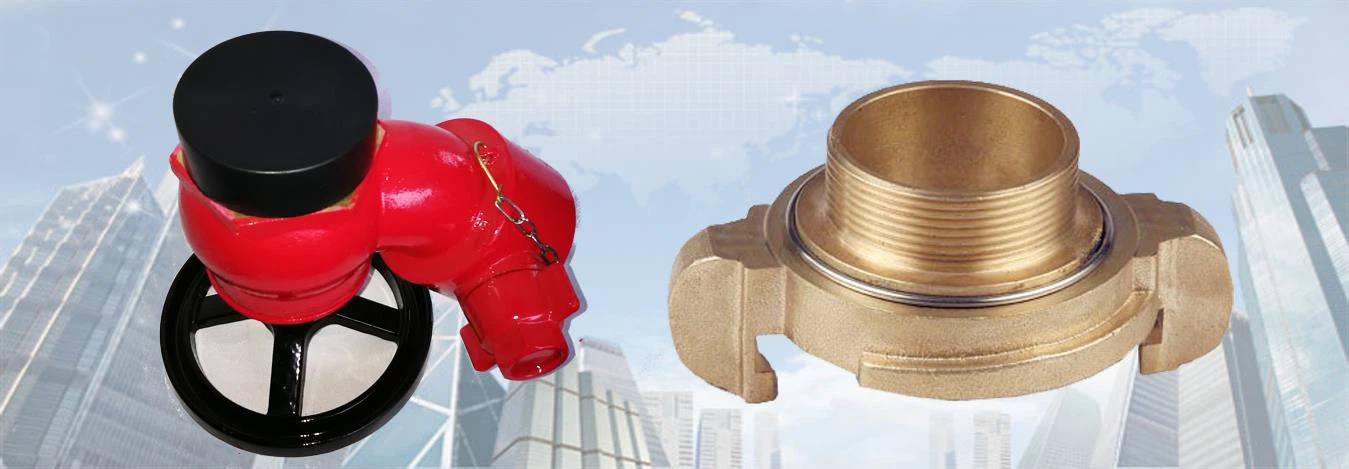
A fire hydrant is a fire hydrant whose valve, water outlet and part of the shell are exposed to the ground. It is used to supply water to fire trucks or directly connect with hoses and water guns to extinguish fires. It can also be directly connected with hoses and water guns to extinguish water. It is one of the important fire fighting facilities for fighting fires.
The ground fire hydrant is an outdoor ground fire water supply facility.
Fire hydrant structure diagram
It is connected with hose and water gun for fire extinguishing. It is a special facility for outdoor fire fighting and water supply. Its upper part is exposed on the ground, the mark is obvious, and it is easy to use. It is composed of body, elbow, valve seat, valve disc, drain valve, valve stem and interface. Above-ground fire hydrant is a kind of necessary fire equipment in cities, especially in urban areas and areas with few rivers, to ensure the need for firefighting and flooding. All factories, mines, warehouses, yards, freight yards, high-rise buildings, public places and other densely populated areas should be installed if conditions permit.
Placement of fire hydrants
1. Fire hydrants should be placed in public shared spaces such as corridors or halls. Generally, they will be placed in the walls of the above-mentioned spaces. No matter what kind of decoration they are made, they must be marked with eye-catching marks (indicate "fire hydrant"), and must not Set obstacles in front of it to avoid affecting the opening of the fire hydrant door.
2. The fire hydrant is separated in the room (such as the box), which does not meet the fire protection regulations. It is also not conducive to the timely rescue of firefighters.
How to use fire hydrants
1. Open the fire hydrant door and press the internal fire alarm button (the button is for alarming and starting the fire pump).
2. One person took the gun head and hose and ran towards the fire point.
3. Another person connects the hose and valve port.
4. Open the valve counterclockwise and spray water out. Note: Be sure to cut off the power supply for electric fires.
Don't ignore the role of fire hydrants
It is generally believed that as long as the fire truck arrives at the fire site, it can immediately put out water to put out the fire. In fact, quite a few of the fire trucks equipped by the fire brigade do not carry water, such as elevating fire trucks, rescue trucks, fire field lighting trucks, etc. They must be used in conjunction with fire fighting trucks. However, some fire-fighting trucks need to find a water source when extinguishing fires due to their limited water capacity. At this time, the fire hydrant has a huge water supply function.
However, in real life, due to the lack of awareness of fire safety in some units and individuals, fire hydrants are damaged in many ways, either lacking "arms" or "legs". Some fire hydrants located next to the main street are occupied and buried by construction projects; Some fire hydrants are surrounded by vehicles, stalls, etc., and cannot be connected at all. Some have even interrupted the water supply, which seriously threatens the smooth development of fire fighting. In the event of a fire, these fire hydrants will not be able to perform their due role.
The fire hydrant is an important tool to ensure the firefighting force to put out the fire. Its insufficiency and damage pose a serious threat to the safety of people's lives and property. Therefore, we hope that while taking care of other urban public facilities, we should also pay attention to the "safety" of fire hydrants!
Fire hydrant laws
Article 28 of the "Fire Protection Law" stipulates: No unit or individual shall damage, misappropriate or dismantle or disable fire-fighting facilities and equipment without authorization, and shall not bury, confine or cover fire hydrants or occupy fire separation distances, and shall not occupy, block or seal Evacuation passages, safety exits, fire engine passages.
Among them, "fire hydrant" refers to a fire-fighting water supply device that is connected to the water supply pipe network and is composed of a valve, a water outlet, and a shell. It is an important water supply device for fire fighting to prevent the spread of fire.
Installation and design of fire hydrant
1. The design of fire hydrant installation should consider installing in the intersection area of the street. In ensuring the eye-catching position without affecting pedestrians and vehicles, maintenance and daily drainage and drainage are convenient. Such as the sidewalk along the street. Next to the rainwater drain, beside the sidewalk tree. Some ground-type fire hydrants, due to the original installation and later road elevation changes, buried and blocked the fire hydrant's discharge outlets and were unable to discharge water. This caused the water quality in the fire hydrant cavity to change and the screw rods were rusted, which affected the water quality of the pipe network. The service life of fire hydrants.
2. Underground fire hydrant installation design. Underground fire hydrants are not planned to be installed in the underground well. Therefore, the daily height of the fire hydrant outlet and the level of the outlet are the key to the convenience of water intake. Considering the water intake of the fire department, the height of the outlet from the ground should be controlled at about 30cm. Considering maintenance and ease of use, the position of the water outlet day should be close to the wellhead. If the fire hydrant J} is deep and the riser pipe connected to the fire hydrant is too long, the riser pipe should be fixed in the well to ensure the safety in use.
3/ For the design of outdoor fire hydrants near the super high-rise building, the distance between the fire hydrant and the pump adapter of the super high-rise building should be considered, so that once the super high-rise building catches fire, the fire department can take water and connect the pump within the shortest distance.
Key points of fire hydrant selection
1. When the building is within 150m of the protection radius of the municipal fire hydrant, and the fire water consumption does not exceed 15L/s, the outdoor fire hydrant may not be installed.
2. Outdoor fire hydrants should be evenly arranged around high-rise buildings and should not be concentrated on one side of the building.
3. The distance between the outdoor fire hydrant of the civil air defense project and the entrance of the civil air defense project should not be less than 5m.
4. The outdoor fire hydrants of the parking lot should be arranged along the periphery of the parking lot, and the distance from the nearest row of cars should not be less than 7m, and the distance from the gas station or garage should not be less than 15m.
5. Outdoor fire hydrants should be installed in places convenient for fire trucks.
6. Outdoor fire hydrants should be above ground. When underground fire hydrants are used, there should be obvious signs. The underground type should be used in cold areas, the above-ground type should be used in non-cold areas, and the above-ground type can be used as anti-collision type if conditions permit.
7. Outdoor above-ground fire hydrants should have one spigot with a diameter of 150mm or 100mm and two spigots with a diameter of 65mm. Outdoor underground fire hydrants should have a spigot each with a diameter of 100 and 65 mm.
8. The protection radius of outdoor fire hydrants should not exceed 150m, and the spacing should not exceed 120m.
9. The outdoor fire hydrant should not be more than 2m away from the roadside, and should not be less than 5m away from the outer wall of the house.