

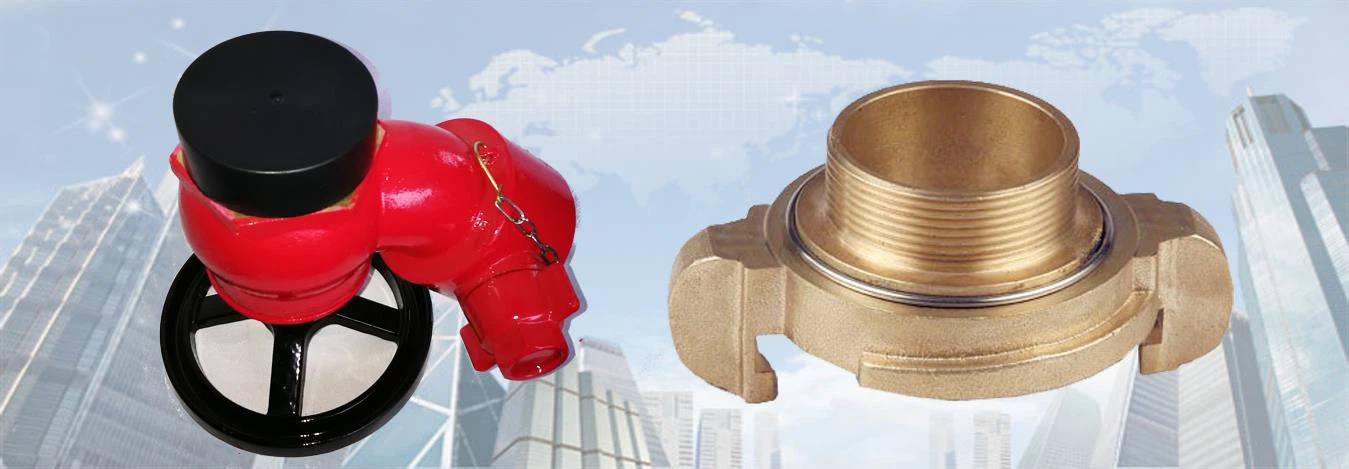
The internal structure of fire hydrant valve mainly includes the following parts:
Valve body
It is the core part of fire hydrant valve, usually made of corrosion-resistant materials such as cast iron, cast steel or copper alloy, with certain corrosion resistance and pressure resistance. There is a water flow channel inside it, which is responsible for controlling the opening and closing of water flow.
Valve stem
It is used to transmit rotational torque to open or close the valve. It is usually made of stainless steel or carbon steel materials and has sufficient strength and corrosion resistance. The valve stem can move through the top of the valve cover. Some valve stems are provided with a movable cavity, and the cavity is provided with connecting rods and other components.
Valve flap
It is generally located at the bottom of the valve stem and cooperates with the valve seat to realize the sealing function of the valve. The valve flap is usually round or spherical, and there may be a sealing ring made of rubber or other sealing materials on its surface to enhance the sealing effect. When the valve flap fits tightly with the valve seat, it can prevent water from passing through; when the valve flap leaves the valve seat, the water flow channel opens to realize water supply.
Valve seat
It is the sealing part of the valve, usually made of materials such as rubber, metal or ceramic, and has good sealing performance. Installed on the valve body, in conjunction with the valve disc, it can effectively prevent water leakage and ensure the normal operation of the fire hydrant.
Sealing pad
Used at the connection between the valve stem and the valve body, it plays a sealing role to prevent water from leaking from the valve stem. Usually made of materials such as rubber or polytetrafluoroethylene, it has good sealing and corrosion resistance.
Spring
In some fire hydrant valves, springs are used to provide elastic force to make the valve disc fit tightly with the valve seat to ensure the sealing effect; or used to reset the valve stem and other components. For example, in some valves with special structures, the spring can help the valve stem return to its initial position after operation.
Indicator
Some fire hydrant valves may have indicator signs inside to show the opening status of the valve, and some also include flow direction indicators to help quickly identify the direction of water flow.
Other components
Some fire hydrant valves may also include bearings, sleeves and other components to support and reduce the friction resistance when the valve stem rotates; in fire hydrant valves with special functions, there may also be heating spirals, heat conducting rods and other components to prevent the valve from freezing in cold weather.